
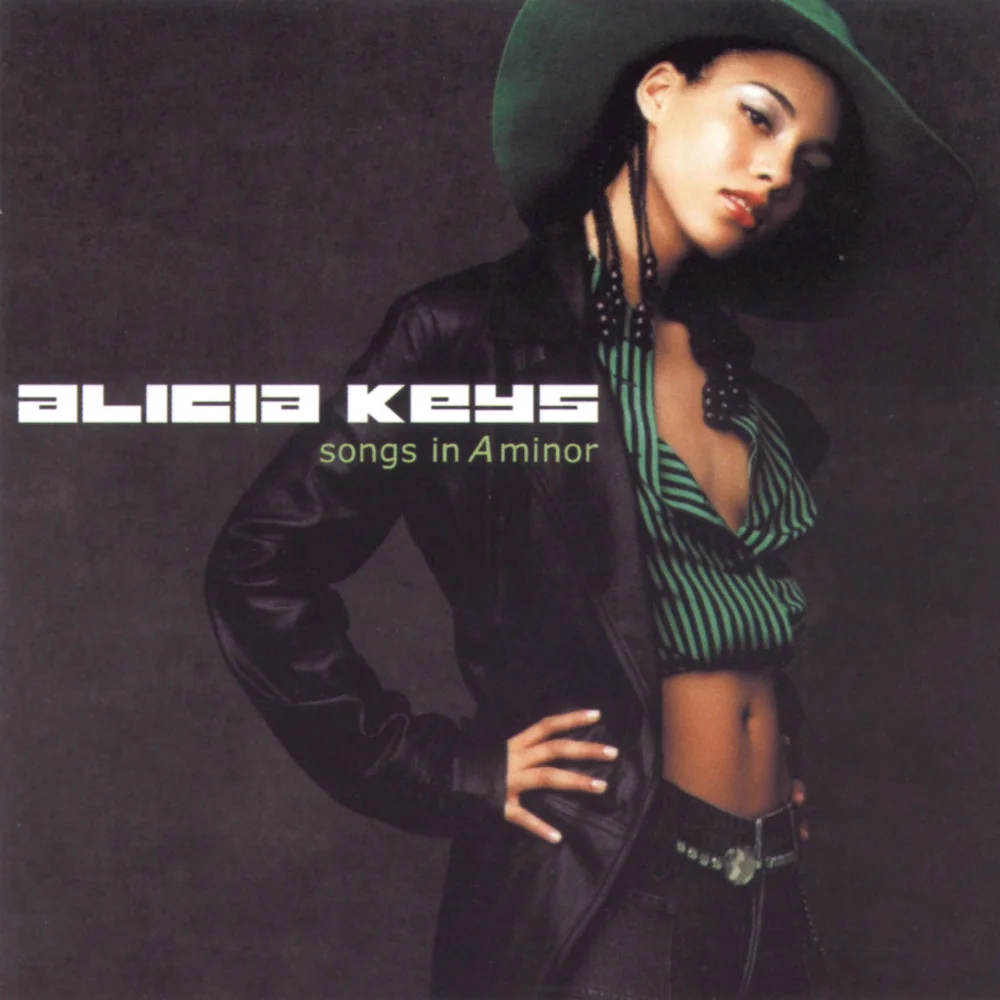
The Neo-Soul Anthem
When Alicia Keys released Songs in A Minor, "Fallin’" became an instant classic, blending classical piano with gospel-inspired vocals. It is sung in 12/8 time, giving it that rolling, bluesy feel. While the range isn't excessively high, the challenge lies in the control and the texture of the voice.
To sing this well, you need to master the transition between deep, resonant low notes and powerful belting without sounding "shouty." The emotional delivery is just as important as pitch accuracy.
AI Coach Tip: Watch the "Oh" Vowels
In the chorus "I keep on fallin’...", singers often close their mouth too much on the "Oh" sound in "on". Keep the jaw dropped to maintain resonance and prevent the sound from becoming nasal.
Phase 1: The Verses (Restraint)
The song begins with the iconic "I keep on fallin’ in and out of love with you." This sits in the lower part of the female range (around A3/B3). Do not push here.
The Technique: Use a warm chest voice. Think of speaking the lyrics to someone in the room. If you try to sing this too loudly, you will have nowhere to go when the dynamics build later.
Phase 2: The Chorus (Power)
As the drums kick in, the vocal intensity lifts. You are hitting notes around D5 and E5. This requires a strong mix or belt.
- Support: Engage your diaphragm. The tendency is to squeeze the throat to get the "grit," but real power comes from breath pressure, not throat tension.
- The "Fallin’": Alicia slides into these notes. Practice the glissando (slide) slowly to ensure you land squarely on the pitch.
Phase 3: The Ad-libs (Agility)
Towards the end of the song, Alicia unleashes a series of runs and riffs. These are based largely on the E Minor pentatonic scale.
To execute these cleanly, avoid "smearing" the notes together. Isolate each note in the run on a "du-du-du" sound first to get the articulation crisp, then add the vowels back in. The AI Coach app is particularly useful here for visualizing if your runs are sharp or flat.
Frequently Asked Questions
The core melody reaches up to an E5. However, with ad-libs and harmonies, vocalists often push higher depending on their arrangement.
Alicia has a natural huskiness, but you can mimic this safely using "vocal fry" at the onset of words. Do not grind your vocal cords to achieve this sound, as it can cause long-term damage.
It is intermediate. The melody is repetitive and catchy, which is good for beginners, but the ad-libs and dynamic control required make it challenging to master completely.