
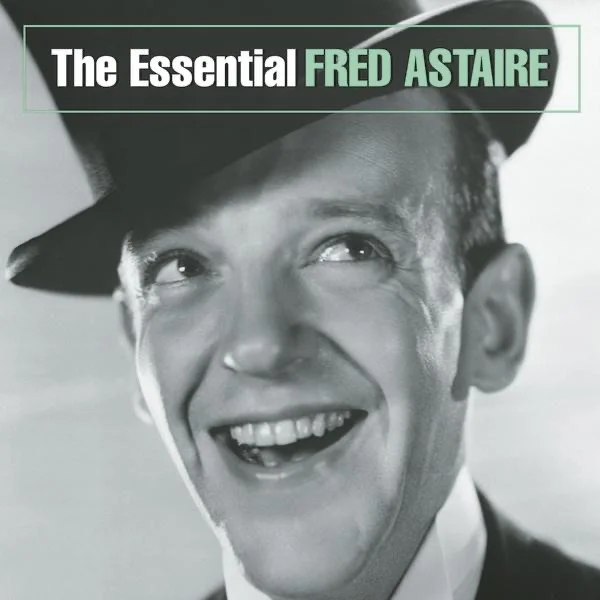
The Gold Standard of Charm
Written by Irving Berlin for the 1935 movie Top Hat, "Cheek to Cheek" is the definitive song for relaxed, charming vocal delivery. While Fred Astaire famously claimed he had a "small" voice, his rendition is a masterclass in phrasing and acting through song.
Unlike modern pop songs that rely on power belting, this track demands control. You need to sustain long, legato lines without running out of breath, all while maintaining a smile in your tone. Let's break down the technique.
AI Coach Tip: Speak the Song
Astaire used a technique called parlando—singing as if he were speaking. Don't over-dramatize the vowels. Keep them natural, bright, and forward in the mask of the face.
Phase 1: The Verse (0:00 - 1:12)
The song opens with "Heaven, I'm in heaven..." The challenge here is the long vowel on "Heaven." It sets the tone for the entire piece. You must support this note from your diaphragm so the pitch doesn't waver.
The Trap: Rushing the beat. This is jazz/swing. You want to sit slightly on the "back" of the beat to give it that relaxed, cool feeling. If you anticipate the beat too much, the song loses its groove.
Phase 2: The Bridge (1:13 - 1:45)
The lyrics shift to "Oh I love to climb a mountain..." Here, the melody becomes more active and the dynamics should lift. This section serves as a contrast to the smooth A-section.
- Breath Control: The phrases here are longer and more wordy. Plan your breaths at punctuation marks.
- Articulation: Fred Astaire was a dancer, and his singing had rhythm. Consonants like 't' and 'k' should be crisp and percussive.
Phase 3: The Climax and Vibrato
As you return to the final "Heaven," feel free to add a gentle vibrato at the ends of phrases. It shouldn't be a heavy, operatic wobble, but a light shimmer to warm up the tone.
Keep your larynx neutral. If you reach for the higher notes (typically E4 or F4), resist the urge to strain. Keep the volume conversational, and the high notes will float out easily.
Frequently Asked Questions
In the standard key of C Major, the highest note is typically an E4 or F4 depending on the specific arrangement. It sits comfortably in the chest voice for most men.
The notes are not difficult, but the style is. Mastering the smooth legato (connected notes) and breath control without sounding breathless is the real challenge.
Smile while you sing! This brightens the resonance. Also, focus on a consistent, warm airflow rather than sudden bursts of volume.